A compact dash cam offers a perfect blend of performance and discretion, providing peace of mind and protection without cluttering the dashboard. These devices are designed to be small and unobtrusive, ensuring an unobstructed view while recording every moment. For example, the Garmin Dash Cam Mini 2 is a popular choice due to its excellent video quality and tiny size, making it a silent, vigilant co-pilot for any driver.
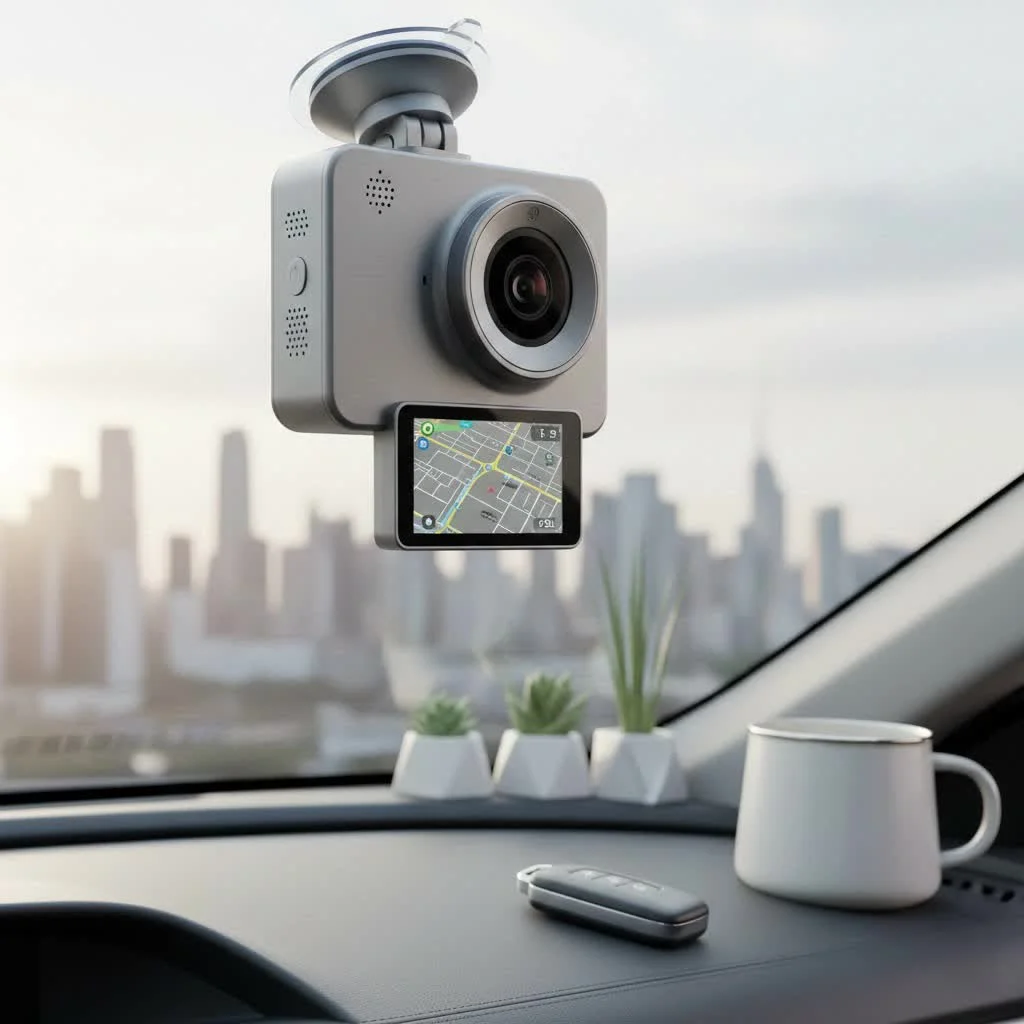
Having tested and installed numerous car cameras over 15 years, I’ve observed a clear trend: drivers seek powerful features in the smallest possible package. This guide will help you choose, install, and maximize the benefits of your compact dash cam. For shop curated automotive dash on this site.
Why Should You Choose a Compact Dash Cam?
The primary appeal of a compact dash cam is its small size, but the benefits extend beyond aesthetics. A smaller device is inherently more discreet, making it less of a target for potential thieves and less distracting for the driver.
- Stealth and Security: A well-hidden compact dash cam is less likely to be noticed by vandals or thieves. When your car is parked, an invisible security system like a small dash cam excels at providing protection.
- Unobstructed View: Safety is paramount. A smaller camera can be neatly tucked behind the rearview mirror, ensuring your line of sight remains completely clear. This allows for an “install and forget” approach.
- Aesthetic Appeal: Modern car interiors are sleek and minimalist. A compact dash cam respects this design philosophy, integrating seamlessly without adding a clunky, aftermarket look.
- Legal and Compliance: In some regions, regulations exist regarding windshield mounts and occupied space. A smaller device is more likely to comply with these rules.
“The best dash cam is the one you don’t notice until you need it,” says David Chen, an automotive electronics specialist. “Compact models provide that exact experience. They deliver top-tier evidence and protection without any of the daily visual intrusion.”
Key Features in a Small Package
Don’t let the small size deceive you. The best compact dash cams are equipped with the same powerful technology as their larger counterparts. When shopping, prioritize these features.
Video Quality is Non-Negotiable
The primary function of a dash cam is to record clear, usable footage. A small form factor should not compromise resolution.
- Full HD (1080p): This is the absolute minimum standard, sufficient for capturing clear details like road signs and general traffic conditions in good lighting.
- Quad HD (1440p or 2K): A significant upgrade, offering much sharper images that make it easier to read license plates from a distance.
- Ultra HD (4K): Provides the highest level of detail, especially when zooming in on a saved video file. The difference is most noticeable in challenging lighting conditions, such as dusk or rain.
Form Factor: Wedge vs. Cylinder
|
Our Picks for the Best Dash Cam in 2026
As an Amazon Associate I earn from qualifying purchases.
|
||
| Num | Product | Action |
|---|---|---|
| 1 | 4K Dash Cam Front, Built-in 5G WiFi, 64GB Card Included, Dash Camera for Cars, Mini Dashcam with Super Night Vision, Loop Recording, G-Sensor, 24 Hours Parking Monitor, Support 256GB Max |

|
| 2 | Dash Cam 1296P Front Dashcam, V300 WiFi Dash Camera for Cars with App, Night Vision, Mini Hidden Single Car Camera, Loop Recording, 24H Parking Mode, Support 256GB Max, Black |
|
| 3 | IIWEY N5 4 Channel Dash Cam 360° View, 1080P Front and Rear Inside, Left Right Dash Camera for Cars, 8 IR Lamps Night Vision, 5G WiFi & APP Control, G-Sensor, Parking Mode, with a Free 128GB SD Card |
|
| 4 | REDTIGER 4K Dash Cam Front Rear, STARVIS 2 Sensor, Free Card Included, 5.8GHz WiFi-20MB/s Fast Download, Dash Camera for Cars with GPS, WDR Night Vision, 170°Wide Angle, 24H Parking Mode(F7NP) |
|
| 5 | Dash Cam Front and Rear, 1080P Dash Camera for Cars, 3 Channel Car Camera Front Rear and Inside with 32GB Card, Loop Recording, Night Vision, HDR, 24Hr Parking, G-Sensor |
|
| 6 | Navycrest 4K Dash Cam Front and Rear with 64GB Card, Built-in 5G WiFi, Dash Camera for Cars 4K Front and 1080P Rear, Dashcams for Cars Loop Recording, Gravity Sensor, 24-Hours Parking Mode |
|
| 7 | REDTIGER 4K STARVIS 2 Dash Cam Front and Rear, 5GHz WiFi 20MB/s Download, 128GB Card Included, Voice Control, Dash Camera for Cars with 3.18\" Touch Screen, GPS, Loop Recording, Parking Mode(F7N Touch) |
|
| 8 | VIOFO A229 Plus Dash Cam Front and Rear, Dual STARVIS 2 Sensors, 2 Channel HDR, 1440P+1440P Voice Control Car Dash Camera, 5GHz Wi-Fi, Voice Control, Ultra-Precise GPS (SD Card Not Included) |
|
| 9 | ROVE R2-4K DUAL Dash Cam Front and Rear, STARVIS 2 Sensor, FREE 128GB Card Included, 5G WiFi - up to 20MB/s Fastest Download Speed with App, 4K 2160P/FHD Dash Camera for Cars, 3\" IPS, 24H Parking Mode |
|
| 10 | Dash Cam Front and Rear, 2.5K+1080P Dual Dash Camera for Cars, 2’’ Display Mini Car Camera, G-Sensor Dashcam, Night Vision, 24H Parking Mode, Loop Recording, 170°Wide Angle, 32GB Card Included |
|
Compact dash cams typically come in two main shapes, each offering advantages for stealthy installation.
- Wedge Shape: These cameras are designed to mount flush against the windshield, often using an adhesive pad. Their low-profile, angled design makes them appear as a built-in part of the car, blending perfectly behind the mirror.
- Cylindrical (or “lipstick”) Shape: These are even more minimalist, slim and tube-shaped, occupying very little vertical space. This makes them ideal for tight installations or for drivers seeking the absolute smallest footprint possible.
Essential Recording Functions
Beyond resolution, several core features ensure your compact dash cam is always ready to capture critical moments.
- Loop Recording: A fundamental feature of all modern dash cams, it continuously records video in short segments (e.g., 1, 3, or 5 minutes). When the memory card is full, it automatically overwrites the oldest, non-essential files to make room for new recordings, eliminating manual storage management.
- G-Sensor (Gravity Sensor): This sensor detects sudden impacts, such as a collision or heavy braking. When triggered, it automatically locks the current video file, protecting it from being overwritten by loop recording, ensuring crucial evidence is saved.
- GPS Logging: An integrated GPS module embeds your vehicle’s speed and location data into the video file. This can be invaluable for insurance claims or legal disputes, providing an objective record of where and how fast you were traveling.
Smart Features for Modern Drivers
The latest compact models include connectivity features that simplify accessing and managing your footage.
- Wi-Fi and App Connectivity: Built-in Wi-Fi allows the dash cam to connect directly to your smartphone via a dedicated app. This enables live feed viewing, setting changes, and wireless downloading of saved videos without removing the microSD card.
- Parking Mode: This feature provides surveillance while your car is parked. It uses the G-sensor to record if an impact is detected (e.g., a bump in a parking lot) or motion sensors to record activity around the vehicle. Some advanced models offer a low-power “buffered” mode that records a few seconds before an event occurs.
How to Install a Compact Dash Cam for Maximum Stealth
A clean, professional-looking installation is crucial for maintaining the discreet advantage of a compact dash cam. Here’s a simple step-by-step guide to get it right.
- Find the Sweet Spot: The optimal location is typically on the passenger side of the rearview mirror. This hides the camera from the driver’s view and keeps it centered for a balanced recording perspective.
- Clean the Glass: Before mounting, thoroughly clean the area of the windshield with an alcohol wipe to ensure the adhesive pad gets a strong, secure grip.
- Mount the Camera: Peel the backing off the adhesive mount and press the camera firmly against the glass for at least 30 seconds.
- Route the Power Cable: This is the most crucial step for a stealthy look. Start by tucking the power cable into the headliner above the windshield. You can gently pull the headliner down just enough to slide the cable in.
- Run Down the A-Pillar: Continue routing the cable along the passenger-side A-pillar. Most vehicles have a rubber weather-stripping seal you can tuck the cable behind.
- Go Under the Glove Box: Once at the bottom of the A-pillar, run the cable underneath the glove box towards the center console or your 12V power outlet (cigarette lighter). Use the included trim tool or a plastic card to help tuck the wire away.
- Plug and Power On: Plug the power adapter into the 12V socket. The camera should power on automatically when you start the car.
Frequently Asked Questions (FAQ)
What is the best compact dash cam?
The “best” model depends on your budget and specific feature requirements. Brands such as Garmin, VIOFO, and BlackVue are highly regarded for producing reliable and feature-rich compact dash cams. For example, the Garmin Dash Cam Mini 2 and VIOFO A119 Mini are popular choices known for their excellent video quality and extremely small size.
Do compact dash cams overheat?
Overheating can be a concern for any electronic device left in a hot car, especially dash cams. To mitigate this, look for models that utilize supercapacitors instead of traditional lithium-ion batteries. Supercapacitors are significantly more resilient to extreme temperatures, making them safer and more reliable for continuous dash cam operation.
Can I use any microSD card with my dash cam?
No, it is crucial to use a “high endurance” microSD card specifically designed for the constant rewriting cycles that dash cams perform. Standard microSD cards can fail quickly under this demanding workload, potentially leading to lost or corrupted footage and unreliable performance.
Is a 4K compact dash cam worth the extra cost?
For most users, a high-quality 1080p or 1440p camera provides sufficient detail for everyday driving. However, if your priority is capturing the finest details, such as license plates from a greater distance or in challenging weather conditions, the investment in a 4K model can be highly worthwhile.
Do I need to hardwire my compact dash cam?
You only need to hardwire your dash cam if you intend to utilize its parking mode feature, which requires continuous power. A hardwire kit connects the camera directly to your car’s fuse box, supplying constant power even when the engine is off. For normal driving recording, the included 12V adapter is sufficient.
The Final Word on Your Silent Guardian
A compact dash cam is an elegant solution for the modern driver who values safety, security, and a clean interior aesthetic. It demonstrates that a large, obtrusive device is not necessary to obtain high-quality video evidence and advanced features like GPS and parking mode. By selecting a small, discreet camera and dedicating a few extra minutes to hide the wiring, you can equip your vehicle with a powerful witness that is always on duty but never in the way. This small investment delivers immense peace of mind on every drive.
Install a Compact Dash Cam for Maximum Stealth
Follow these steps to install your compact dash cam discreetly, ensuring a clean look and optimal recording perspective.
The optimal location for your dash cam is typically on the passenger side of the rearview mirror. This placement effectively hides the camera from the driver's view and ensures a centered, balanced recording perspective for capturing road events.
Before mounting, it is essential to thoroughly clean the area of the windshield where the dash cam will be placed. Use an alcohol wipe to remove any dirt or grease, ensuring the adhesive pad gets a strong, secure grip for long-term stability.
Peel the backing off the adhesive mount and firmly press the camera against the cleaned glass for at least 30 seconds. This ensures a strong bond, preventing the camera from detaching due to vibrations or temperature changes.
For a stealthy look, start by tucking the power cable into the headliner above the windshield. Gently pull the headliner down just enough to slide the cable in, then continue routing it along the passenger-side A-pillar, tucking it behind the rubber weather-stripping seal.
Once the cable is routed under the glove box towards your 12V power outlet, plug the power adapter into the socket. The camera should power on automatically when you start the car, confirming a successful installation.
Get our weekly buyer guide
Practical specs, not advice. Unsubscribe anytime.
I appreciate the focus on small size, and it definitely delivers on that. However, I found the initial setup a bit more fiddly than I expected, especially getting the app connected. Once it’s running, it’s fine, but that first hurdle was a little annoying. Video quality is decent for the price range though.
I finally pulled the trigger on a compact dash cam after reading about how they don’t clutter the dashboard. I went with the Garmin Dash Cam Mini 2, and it’s exactly as described – super tiny but the video quality is surprisingly good. It really is a silent, vigilant co-pilot, and I barely even notice it’s there. Highly recommend for anyone who hates bulky gadgets.
I’ve been looking for a dash cam that wouldn’t be a target for theft, and the point about discretion really hit home. My previous one was much larger and always made me nervous. This new compact model is much less noticeable from outside the car, which gives me a lot more peace of mind. Installation was pretty straightforward too.
After years of using bulkier cameras, the idea of a compact dash cam that still offers powerful features was really appealing. I love that it doesn’t obstruct my view at all. It’s great to have that protection without feeling like I have a giant camera stuck to my windshield. Definitely a game-changer for me.