A rear dash cam is an essential component for complete vehicle security, providing crucial video evidence of incidents occurring behind your car. It records everything from rear-end collisions to parking lot hit-and-runs, offering 360-degree protection that a front-facing camera alone cannot provide. According to road safety reports, rear-end collisions are among the most common traffic accidents, making a rear camera vital for proving fault and protecting against insurance fraud.
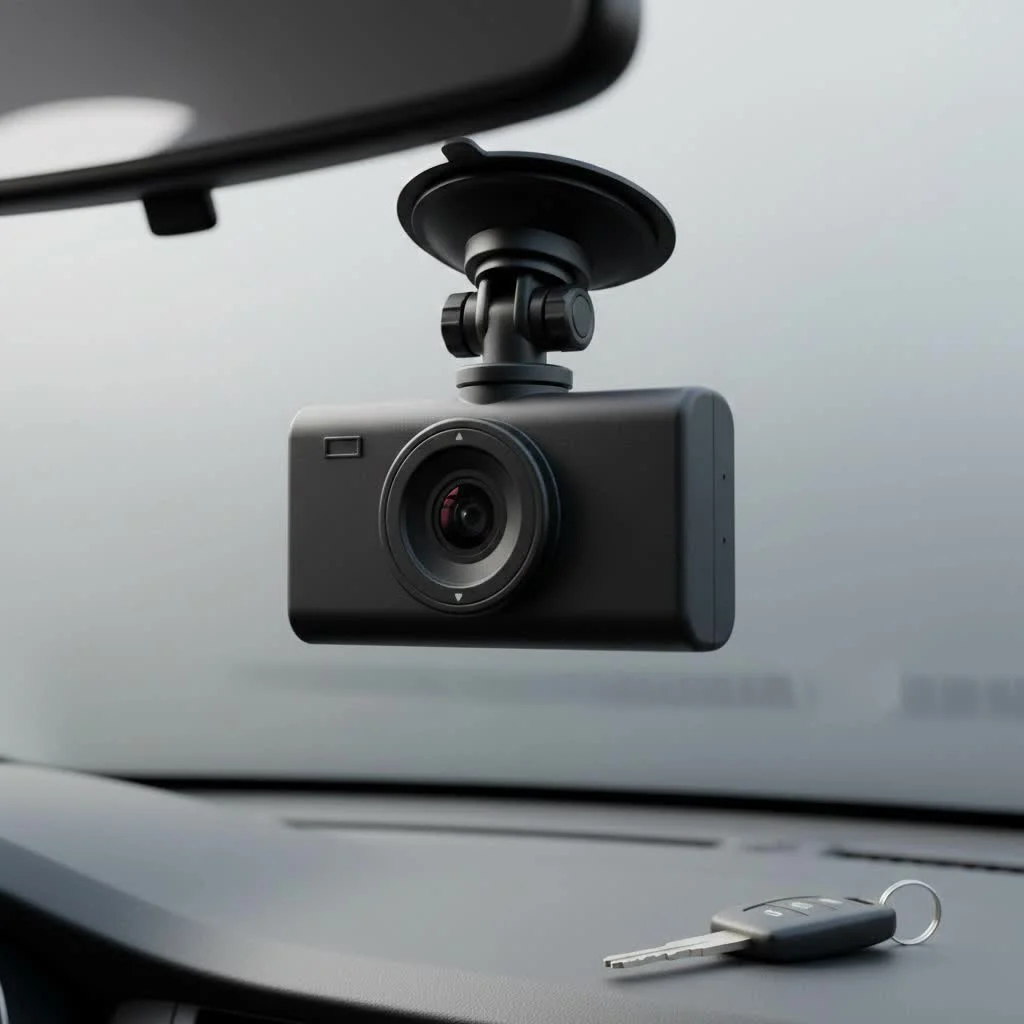 dash cam mounted on a car’s rear window” style=”margin: 20px auto;width: 800px;max-width: 100%;height: auto” />
This guide explores the benefits, key features, and installation basics of rear dash cams, ensuring you can choose and set up the right system for your vehicle.
What is a Rear Dash Cam and Why Do You Need One?
A rear dash cam is a camera mounted on your vehicle’s rear window, tasked with recording everything that happens behind you. It operates in tandem with your front camera, providing a complete picture of any incident. These cameras typically come in two main configurations: as part of a dual-channel system or as a standalone unit.
The primary purpose is to capture evidence. According to road safety reports, rear-end collisions are one of the most common types of traffic accidents. Without a rear camera, proving the other driver was at fault can become a frustrating “he said, she said” situation. A rear dash cam eliminates the guesswork, providing clear, indisputable video evidence.
Here are the undeniable benefits:
- Evidence in Rear-End Collisions: This is the most crucial benefit. The footage will clearly show the sequence of events, proving you were not at fault.
- Protection Against Insurance Fraud: Scammers sometimes intentionally cause accidents by braking suddenly. A rear camera captures their dangerous behavior.
- Capturing Hit-and-Runs: Whether you’re driving or parked, a rear camera can capture the license plate of a driver who hits your car from behind and flees.
- Monitoring Tailgaters: The presence of a visible camera can deter aggressive drivers from tailgating, and if they do, you’ll have a record of their reckless behavior.
- Complete Parking Surveillance: When combined with parking mode, a rear camera records bumps, scrapes, and vandalism that occur in parking lots, which are blind spots for front-only cameras.
How to Choose the Best Rear Dash Cam
Selecting the right rear dash cam depends on your specific needs and vehicle. Not all cameras are created equal, and focusing on a few key features will ensure you get a reliable device that delivers when you need it most.
Dual-Channel vs. Standalone Systems
First, decide on the system type.
- Dual-Channel (or 2CH) System: This is the most popular and integrated solution. It includes a front and a rear camera that are connected, recording simultaneously to a single memory card. This is convenient, cost-effective, and ensures seamless operation.
- Standalone Rear Camera: This is a less common option where you install a separate, independent dash cam on your rear window. It requires its own power source and memory card. This can be a good choice if you already have a front camera and want to add a rear view without replacing your existing setup.
Key Features to Look For
|
Our Picks for the Best Dash Cam in 2026
As an Amazon Associate I earn from qualifying purchases.
|
||
| Num | Product | Action |
|---|---|---|
| 1 | Navycrest 4K Dash Cam Front and Rear with 64GB Card, Built-in 5G WiFi, Dash Camera for Cars 4K Front and 1080P Rear, Dashcams for Cars Loop Recording, Gravity Sensor, 24-Hours Parking Mode |

|
| 2 | Dash Cam Front and Rear, 2.5K+1080P Dual Dash Camera for Cars, 2’’ Display Mini Car Camera, G-Sensor Dashcam, Night Vision, 24H Parking Mode, Loop Recording, 170°Wide Angle, 32GB Card Included |
|
| 3 | Dash Cam Front and Rear, 1080P Dash Camera for Cars, 3 Channel Car Camera Front Rear and Inside with 32GB Card, Loop Recording, Night Vision, HDR, 24Hr Parking, G-Sensor |
|
| 4 | ROVE R2-4K DUAL Dash Cam Front and Rear, STARVIS 2 Sensor, FREE 128GB Card Included, 5G WiFi - up to 20MB/s Fastest Download Speed with App, 4K 2160P/FHD Dash Camera for Cars, 3\" IPS, 24H Parking Mode |
|
| 5 | REDTIGER 4K Dash Cam Front Rear, STARVIS 2 Sensor, Free Card Included, 5.8GHz WiFi-20MB/s Fast Download, Dash Camera for Cars with GPS, WDR Night Vision, 170°Wide Angle, 24H Parking Mode(F7NP) |
|
| 6 | IIWEY N5 4 Channel Dash Cam 360° View, 1080P Front and Rear Inside, Left Right Dash Camera for Cars, 8 IR Lamps Night Vision, 5G WiFi & APP Control, G-Sensor, Parking Mode, with a Free 128GB SD Card |
|
| 7 | VIOFO A229 Plus Dash Cam Front and Rear, Dual STARVIS 2 Sensors, 2 Channel HDR, 1440P+1440P Voice Control Car Dash Camera, 5GHz Wi-Fi, Voice Control, Ultra-Precise GPS (SD Card Not Included) |
|
| 8 | Dash Cam 1296P Front Dashcam, V300 WiFi Dash Camera for Cars with App, Night Vision, Mini Hidden Single Car Camera, Loop Recording, 24H Parking Mode, Support 256GB Max, Black |
|
| 9 | REDTIGER 4K STARVIS 2 Dash Cam Front and Rear, 5GHz WiFi 20MB/s Download, 128GB Card Included, Voice Control, Dash Camera for Cars with 3.18\" Touch Screen, GPS, Loop Recording, Parking Mode(F7N Touch) |
|
| 10 | 4K Dash Cam Front, Built-in 5G WiFi, 64GB Card Included, Dash Camera for Cars, Mini Dashcam with Super Night Vision, Loop Recording, G-Sensor, 24 Hours Parking Monitor, Support 256GB Max |
|
Once you’ve decided on the system, evaluate these critical features:
Video Quality: Resolution and Frame Rate
For a rear camera, a minimum resolution of 1080p (Full HD) is essential. This level of detail is necessary to capture important information like license plates and road signs, even in less-than-ideal conditions. While 4K is excellent for the front, 1080p is the sweet spot for rear cameras, balancing quality with file size. A frame rate of 30 frames per second (fps) is standard for smooth video playback.
Low-Light Performance and Night Vision
The camera behind you often faces challenging lighting, from the glare of headlights at night to the shadows of tall buildings. Look for a camera with a high-quality image sensor, like Sony’s STARVIS, which is specifically designed for excellent low-light performance. A wide dynamic range (WDR) is also crucial, as it balances the bright and dark areas of the footage to prevent overexposure from headlights.
Field of View (FOV)
The field of view determines how wide an angle the camera can capture. For a rear camera, a FOV between 130 and 160 degrees is ideal. This is wide enough to cover multiple lanes of traffic without causing a “fisheye” effect that distorts the image.
As our lead technician, Mark Chen, always says, “A rear camera is your best witness in the event of a rear impact. The clarity of the license plate it captures is often the single most important piece of evidence you can provide to your insurance company and law enforcement.”
The Basics of Installing a Rear Dash Cam
While professional installation is always an option, installing a dual-channel rear dash cam is a manageable DIY project for many. The key is patience and a bit of planning.
Here is a simplified step-by-step guide:
- Mount the Front Camera: First, position and mount your main front-facing dash cam near the rearview mirror, ensuring it doesn’t obstruct your view.
- Mount the Rear Camera: Clean the rear windshield thoroughly. Mount the rear camera at the top center, making sure the lens has a clear view and is not blocked by defrost lines if possible.
- Route the Connection Cable: This is the most time-consuming part. The goal is to hide the cable that connects the rear camera to the front unit. Start from the rear camera and gently tuck the cable into the headliner of your vehicle.
- Run the Cable Along the Side: Continue tucking the cable along the headliner, down the A-pillar or B-pillar (the columns supporting the roof), and across to the front camera. You can use a plastic trim tool to gently pry open panels to hide the wire.
- Connect and Power Up: Plug the rear camera cable into the front unit. Then, connect the main power cable from the front unit to your vehicle’s power source (usually a 12V socket or a hardwire kit).
- Test the System: Turn on your car to power up the dash cam. Check the live view on the camera’s screen or app to confirm both the front and rear cameras are working and angled correctly.
Frequently Asked Questions (FAQ)
Is a rear dash cam really worth the extra cost?
Absolutely. A rear-end collision is the most common type of accident. Without a rear camera, you have little to no evidence to prove your innocence, which could impact your insurance claims and premiums. The relatively small investment offers immense protection.
Will a rear dash cam drain my car’s battery?
When professionally installed with a hardwiring kit, a rear dash cam system with parking mode is designed to monitor your car’s battery voltage. It will automatically shut down before the battery level gets too low to start your engine, preventing drainage.
Where is the best place to mount a rear dash cam?
The ideal position is at the top center of your rear windshield. This provides the most comprehensive view of the road behind you. Ensure the wiper path clears the area in front of the lens for a clean view during rain or snow.
Can I add a rear camera to my existing front dash cam?
Generally, no. Most single-channel dash cams do not have an input port to add a rear camera. You would typically need to purchase a complete dual-channel system designed to work together.
Your Car’s Best Defense Mechanism
In today’s driving environment, a front-facing dash cam is only half the solution. By adding a rear dash cam, you create a complete video surveillance system for your vehicle, protecting you from every angle. It provides undeniable proof in accidents, deters crime, and offers invaluable peace of mind whether you are driving down the highway or parked at the grocery store. Don’t leave your rear unguarded—invest in full coverage protection today.
Frequently Asked Questions
Is a rear dash cam really worth the extra cost?
Yes, a rear dash cam is absolutely worth the investment. Rear-end collisions are the most common type of accident, and a rear camera provides indisputable evidence to prove your innocence, potentially saving you from increased insurance premiums and lengthy disputes. The cost of a quality rear dash cam is minimal compared to potential financial losses from an unproven accident claim.
Will a rear dash cam drain my car's battery?
A properly installed rear dash cam system, especially with a hardwiring kit and parking mode, is designed to prevent battery drainage. These systems typically include voltage monitoring that automatically shuts down the camera if the car's battery level drops too low, ensuring you can always start your engine. This intelligent power management protects your vehicle's battery health.
Where is the best place to mount a rear dash cam?
The ideal mounting position for a rear dash cam is at the top center of your rear windshield. This placement offers the most comprehensive and unobstructed view of the road behind your vehicle. It's also important to ensure the camera's lens is within the sweep of your rear wiper for clear footage during adverse weather conditions like rain or snow.
Can I add a rear camera to my existing front dash cam?
Generally, you cannot add a rear camera to an existing single-channel front dash cam. Most standalone front cameras lack the necessary input port to connect a secondary rear unit. To achieve front and rear recording, you typically need to purchase a complete dual-channel dash cam system that is specifically designed to operate both cameras together.
What video resolution is best for a rear dash cam?
For a rear dash cam, a minimum resolution of 1080p (Full HD) is essential. This resolution provides sufficient detail to capture critical information such as license plates and road signs, even in challenging lighting. While 4K is beneficial for front cameras, 1080p offers an optimal balance of video quality and manageable file sizes for rear footage.
Install a Dual-Channel Rear Dash Cam
This guide outlines the basic steps for installing a dual-channel dash cam system, including both front and rear cameras, to ensure full vehicle protection.
Position and securely mount your primary front-facing dash cam near the rearview mirror. Ensure the camera's view is clear and does not obstruct your driving visibility. This is the starting point for your entire dash cam system.
Thoroughly clean the rear windshield. Mount the rear camera at the top center, ensuring its lens has an unobstructed view and is not blocked by defrost lines. Proper placement is crucial for capturing clear footage behind your vehicle.
Begin from the rear camera and carefully tuck the connection cable into the headliner of your vehicle. The goal is to hide the cable that links the rear camera to the front unit, maintaining a clean interior aesthetic. Take your time to ensure the cable is neatly concealed.
Continue tucking the cable along the headliner, then guide it down either the A-pillar or B-pillar (the structural columns supporting the roof). Route the cable across to the front camera. A plastic trim tool can assist in gently prying open panels to hide the wire effectively.
Plug the rear camera cable into the designated port on the front unit. Next, connect the main power cable from the front unit to your vehicle's power source, typically a 12V socket or a hardwire kit. This step energizes your entire dash cam system.
Get our weekly buyer guide
Practical specs, not advice. Unsubscribe anytime.
This guide was super helpful in breaking down why a rear camera is so important for full vehicle security. I always thought a front one was enough, but the stats on rear-end collisions really opened my eyes. My new setup records both front and back, and the video quality is excellent. Only wish the cable management was a bit easier, but that’s a minor gripe.
I finally got a rear dash cam after someone backed into me in a parking lot and drove off. The guide here really helped me understand the different features. I went with one that has parking surveillance and it’s already given me so much peace of mind. Installation was pretty straightforward too, even for a non-techy person like me.
Been meaning to get a rear dash cam for ages, especially after reading about how common insurance fraud is with rear-end accidents. This guide confirmed all my suspicions and helped me pick a reliable brand. The dual-channel recording is a game-changer for complete coverage. Definitely feel safer on the road now.
I appreciated the breakdown of installation basics, especially for routing the cable. My main issue is with the night vision on the model I picked; it’s not quite as clear as I hoped for when it’s really dark out. It still records, but details are a bit fuzzy. For daytime driving though, it’s perfectly fine and does what it needs to do.