The best wireless dash cam for most drivers in 2025 is the Viofo A329S, offering superb 4K/60fps video quality, Wi-Fi 6 for fast transfers, and excellent night vision. While “wireless” dash cams do not operate without a power cable, they utilize Wi-Fi connectivity to transfer video footage and manage settings via a smartphone app, eliminating the need to remove a microSD card for data access.
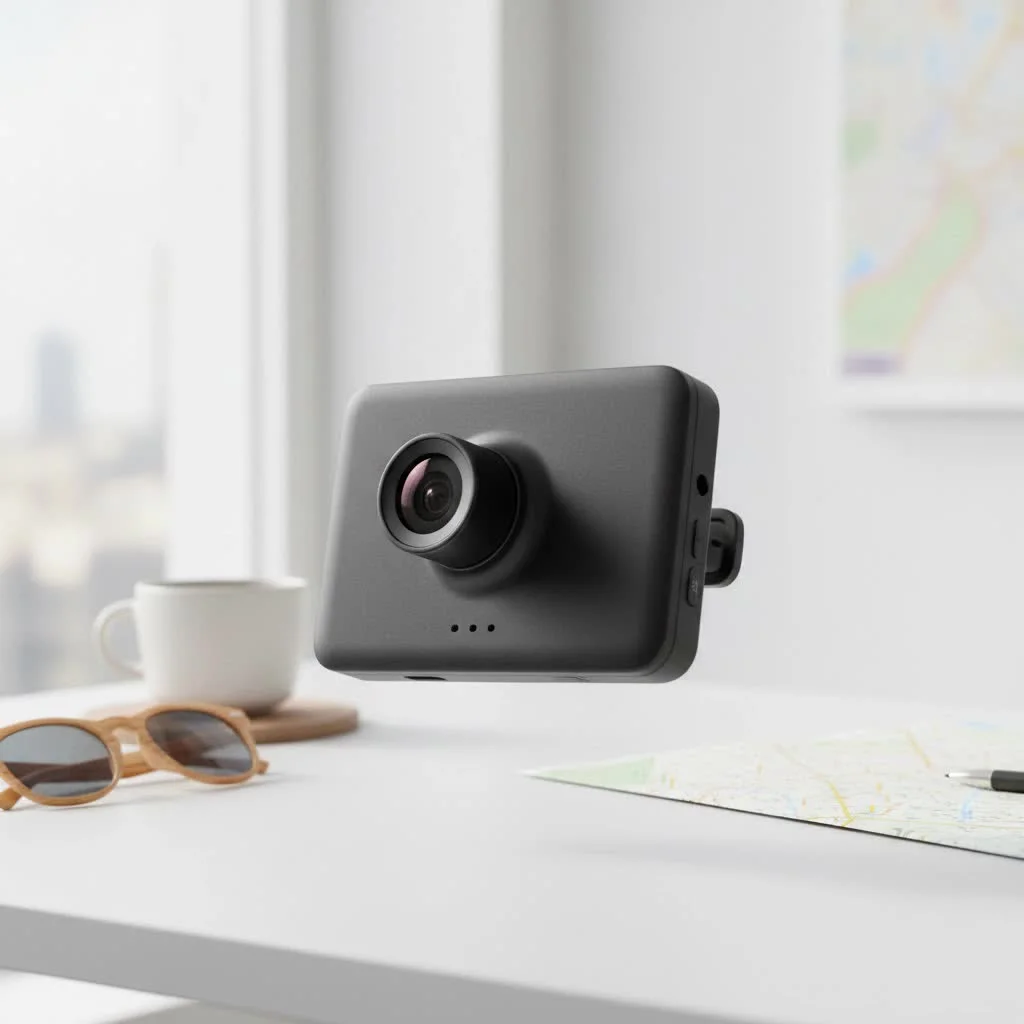
What “Wireless” Really Means for Dash Cams
The primary misconception about “wireless” dash cams is that they are entirely cable-free. In reality, 99% of models on the market require a wired power source, typically from a car’s 12V outlet or a hardwire kit connected to the fuse box. The “wireless” aspect refers to the method of data transfer, allowing users to connect to the dash cam via built-in Wi-Fi to a smartphone app. For explore our automotive dash reviews on this site.
- Wireless Data Transfer: This key feature enables viewing, downloading, and sharing recorded videos directly to a smartphone without physically removing the microSD card.
- Wired Power: All reliable dash cams need a consistent power supply, usually through a cable plugged into the car’s 12V outlet or a hardwire kit for direct connection to the fuse box.
Therefore, when selecting a wireless dash cam, prioritize models that offer a seamless app experience for data management, rather than expecting a battery-operated device.
Why Choose a Wireless Dash Cam?
The main advantage of a wireless dash cam is convenience. The ability to instantly review footage on your phone after an incident is invaluable for showing evidence to law enforcement or downloading clips of reckless drivers. This streamlines the process, making the technology user-friendly. Managing settings through a well-designed app is significantly easier than using small buttons on the camera itself.
Key Features to Look For in the Best Wireless Dash Cam
Choosing the right model involves more than just Wi-Fi capability. Here are the critical features to consider for optimal performance and reliability.
Video Quality: Beyond Just 4K
Resolution is important, but it’s not the only factor. While 4K offers the most detail, a high-quality 1080p or 1440p camera can often outperform a cheaper 4K unit, especially in low-light conditions.
- Resolution: 4K (2160p) is ideal for capturing license plates at a distance. 1440p (QHD) provides a strong balance, and 1080p (Full HD) is the minimum acceptable standard.
- Frame Rate: Aim for 60 frames per second (fps) for smoother video and clearer detail on moving objects, compared to the standard 30 fps.
- Image Sensor: A high-quality sensor, such as Sony STARVIS, is crucial for excellent low-light performance, providing clarity and accurate color in nighttime driving.
Connectivity and App Experience
|
Our Picks for the Best Dash Cam in 2026
As an Amazon Associate I earn from qualifying purchases.
|
||
| Num | Product | Action |
|---|---|---|
| 1 | Navycrest 4K Dash Cam Front and Rear with 64GB Card, Built-in 5G WiFi, Dash Camera for Cars 4K Front and 1080P Rear, Dashcams for Cars Loop Recording, Gravity Sensor, 24-Hours Parking Mode |

|
| 2 | IIWEY N5 4 Channel Dash Cam 360° View, 1080P Front and Rear Inside, Left Right Dash Camera for Cars, 8 IR Lamps Night Vision, 5G WiFi & APP Control, G-Sensor, Parking Mode, with a Free 128GB SD Card |
|
| 3 | Dash Cam 1296P Front Dashcam, V300 WiFi Dash Camera for Cars with App, Night Vision, Mini Hidden Single Car Camera, Loop Recording, 24H Parking Mode, Support 256GB Max, Black |
|
| 4 | ROVE R2-4K DUAL Dash Cam Front and Rear, STARVIS 2 Sensor, FREE 128GB Card Included, 5G WiFi - up to 20MB/s Fastest Download Speed with App, 4K 2160P/FHD Dash Camera for Cars, 3\" IPS, 24H Parking Mode |
|
| 5 | Dash Cam Front and Rear, 1080P Dash Camera for Cars, 3 Channel Car Camera Front Rear and Inside with 32GB Card, Loop Recording, Night Vision, HDR, 24Hr Parking, G-Sensor |
|
| 6 | REDTIGER 4K Dash Cam Front Rear, STARVIS 2 Sensor, Free Card Included, 5.8GHz WiFi-20MB/s Fast Download, Dash Camera for Cars with GPS, WDR Night Vision, 170°Wide Angle, 24H Parking Mode(F7NP) |
|
| 7 | VIOFO A229 Plus Dash Cam Front and Rear, Dual STARVIS 2 Sensors, 2 Channel HDR, 1440P+1440P Voice Control Car Dash Camera, 5GHz Wi-Fi, Voice Control, Ultra-Precise GPS (SD Card Not Included) |
|
| 8 | 4K Dash Cam Front, Built-in 5G WiFi, 64GB Card Included, Dash Camera for Cars, Mini Dashcam with Super Night Vision, Loop Recording, G-Sensor, 24 Hours Parking Monitor, Support 256GB Max |
|
| 9 | Dash Cam Front and Rear, 2.5K+1080P Dual Dash Camera for Cars, 2’’ Display Mini Car Camera, G-Sensor Dashcam, Night Vision, 24H Parking Mode, Loop Recording, 170°Wide Angle, 32GB Card Included |
|
| 10 | REDTIGER 4K STARVIS 2 Dash Cam Front and Rear, 5GHz WiFi 20MB/s Download, 128GB Card Included, Voice Control, Dash Camera for Cars with 3.18\" Touch Screen, GPS, Loop Recording, Parking Mode(F7N Touch) |
|
Since wireless functionality is a primary benefit, the quality of the Wi-Fi connection and the accompanying app is paramount. A dash cam with fast Wi-Fi but a buggy app will lead to frustration. Look for models with dual-band Wi-Fi (2.4GHz and 5GHz), as the 5GHz band offers significantly faster transfer speeds for large video files. The app should be intuitive, stable, and easy to navigate.
Power Source: Supercapacitor vs. Battery
Internal batteries in dash cams are susceptible to extreme temperature fluctuations, which can degrade performance and lifespan. A supercapacitor is a far more durable and safer alternative. David Chen, an automotive electrical systems engineer, states, “I always recommend dash cams with supercapacitors over lithium-ion batteries. They are built to withstand the harsh temperature swings inside a vehicle, ensuring reliability and a much longer lifespan. A battery might fail when you need it most, but a supercapacitor will be ready to perform.”
Essential Recording Features
- G-Sensor: This vital feature detects impacts and automatically locks the current video file, preventing it from being overwritten.
- Loop Recording: All dash cams continuously record. When the memory card is full, the oldest unlocked files are automatically overwritten.
- Parking Mode: This feature allows the camera to monitor your vehicle when the engine is off. It typically requires a hardwire kit to draw power from the car’s battery and activates recording upon detecting a bump (G-sensor) or motion.
Top Picks for the Best Wireless Dash Cam in 2025
Based on extensive testing and review, here are the top recommendations that balance performance, features, and value.
| Model | Category | Key Strengths | Potential Weakness |
|---|---|---|---|
| Viofo A329S | Best Overall | Superb 4K/60fps video, Wi-Fi 6, great night vision | Screen can be hard to see on steep windshields |
| Garmin Dash Cam Live | Best Smart Features | Driver assists, cellular option, polished app | Pricier, some features require a subscription |
| Garmin Mini 2 | Most Discreet | Incredibly small, simple set-it-and-forget-it design | Relies entirely on the app for setup and viewing |
| Rove R2-4K Pro | Best Value in 4K | Affordable 4K, dual-band Wi-Fi, GPS included | Lacks advanced driver-assist features |
In-Depth Reviews
Best Overall: Viofo A329S
The Viofo A329S excels in video quality, recording in true 4K at 60fps, which provides exceptionally smooth and clear footage. This high resolution and frame rate are crucial for identifying license plates on moving vehicles. It incorporates a top-tier Sony STARVIS 2 sensor, ensuring incredible performance in low-light conditions. The inclusion of Wi-Fi 6 significantly speeds up the transfer of large 4K files, making it a robust and reliable choice for superior image evidence.
Best for Smart Features: Garmin Dash Cam Live
The Garmin Dash Cam Live integrates advanced features like forward collision and lane departure warnings, common in newer vehicles, alongside crisp 1440p video. Its standout feature is the optional LTE cellular subscription, which allows live remote viewing of the camera, offering enhanced peace of mind. The Garmin Drive app is polished, stable, and intuitive, providing one of the best wireless user experiences available.
Most Discreet: Garmin Mini 2
For those seeking an unobtrusive dash cam, the Garmin Mini 2 is an excellent choice. Its compact size, similar to a car key, allows it to be discreetly mounted behind the rearview mirror without obstructing the driver’s view. Despite its small footprint, it records high-quality 1080p video. All setup, viewing, and settings are managed through the user-friendly Garmin Drive app, making it an ideal “set it and forget it” wireless dash cam.
Best Value in 4K: Rove R2-4K Pro
The Rove R2-4K Pro offers high-quality 4K recording at an affordable price point. It delivers sharp video, includes built-in GPS for logging speed and location, and features reliable dual-band Wi-Fi for quick file transfers to its dedicated app. While it lacks the advanced driver-assist features of Garmin models, it effectively performs the core functions of a wireless dash cam, making it a compelling option for budget-conscious buyers seeking premium resolution.
How to Install Your Wireless Dash Cam
Even with wireless data transfer, a clean power cable installation is essential. Here’s a simple step-by-step guide:
- Find the Perfect Spot: Mount the dash cam on the passenger side of the rearview mirror to keep it out of your direct line of sight while maintaining a clear view of the road.
- Tuck the Cable: Starting at the camera, gently push the power cable into the gap between your windshield and the headliner. Most vehicles have enough space for this to be done by hand.
- Run Down the A-Pillar: Continue tucking the cable along the headliner towards the passenger-side A-pillar (the vertical support between the windshield and the passenger door). Route the cable down along the weather stripping or plastic trim of the pillar.
- Go Under the Dash: Once at the bottom of the A-pillar, run the cable under the glove box towards your car’s 12V power outlet. Use adhesive clips if necessary to secure the cable.
- Plug and Power: Plug the adapter into the 12V outlet. Start your car, and the camera should power on automatically.
- Connect to the App: Follow the manufacturer’s instructions to connect the camera to your phone via Wi-Fi. This allows you to view a live feed and ensure the camera is aimed correctly.
Frequently Asked Questions (FAQ)
How do wireless dash cams get power?Wireless dash cams receive power via a cable connected to your car’s 12V outlet or by being hardwired to the fuse box. The “wireless” aspect refers to the Wi-Fi connection used for transferring video files to your smartphone.
Can a wireless dash cam drain my car battery?If connected to a 12V outlet that powers off with the car, the dash cam will not drain the battery. When using a hardwire kit for parking mode, it draws a minimal amount of power, and these kits typically include a voltage cutoff feature to prevent complete battery discharge.
Do I need to have my phone’s Wi-Fi on all the time?No, your phone’s Wi-Fi does not need to be constantly on. The dash cam continuously records to its microSD card independently. You only need to activate Wi-Fi and connect to the camera’s network when you wish to view live footage, adjust settings, or download a video clip.
Is it difficult to download videos to my phone?Downloading videos is straightforward. Once connected to the dash cam’s Wi-Fi, open the dedicated app, locate the desired clip in the gallery, and tap the download button. With a 5GHz connection, a one-minute video clip can be downloaded in under 30 seconds.
Are wireless dash cams legal?Yes, dash cams are legal in most regions. However, regulations exist regarding their mounting location on the windshield to ensure they do not obstruct the driver’s view. Always verify your local laws for proper placement guidelines.
The Final Verdict
Choosing the best wireless dash cam means prioritizing convenience and reliable, high-quality video capture. By understanding that “wireless” primarily refers to easy file access via a smartphone app, you can focus on essential features. Whether you select the Viofo A329S for superior video, the Garmin Dash Cam Live for smart features, or the Garmin Mini 2 for its discreet design, installing a wireless dash cam is a smart upgrade for your vehicle, providing both evidence and peace of mind on every drive.
Install Your Wireless Dash Cam
A step-by-step guide to cleanly installing your wireless dash cam, focusing on power cable management and app connection.
Mount the dash cam on the passenger side of the rearview mirror. This placement keeps it out of your direct line of sight while ensuring a clear view of the road ahead.
Starting at the camera, gently push the power cable into the gap between your windshield and the headliner. Most vehicles have enough space for this to be done by hand without special tools.
Continue tucking the cable along the headliner towards the passenger-side A-pillar. Route the cable down along the weather stripping or plastic trim of the pillar for a discreet look.
Once at the bottom of the A-pillar, run the cable under the glove box towards your car's 12V power outlet. Use adhesive clips if necessary to secure the cable and prevent it from dangling.
Plug the adapter into the 12V outlet. Start your car, and the camera should power on automatically, indicating a successful connection.
Get our weekly buyer guide
Practical specs, not advice. Unsubscribe anytime.
I appreciate the clarification on what ‘wireless’ actually means for these dash cams. I was definitely one of those people who thought they’d be completely cable-free. Still, being able to manage settings and download clips through the app without taking out the card is a huge convenience. It’s made reviewing footage so much easier.
The night vision on my new dash cam is fantastic. I drive a lot for work, often late, and having that extra layer of security with clear footage, even in low light, is a huge relief. The Wi-Fi connectivity for quick downloads to my phone is also super handy for sharing with insurance if needed.
I finally upgraded to the Viofo A329S after reading about it here, and wow, the 4K/60fps video quality is just incredible. Even at night, the footage is super clear, which was a big concern for me. The Wi-Fi 6 for transfers is a game-changer too; no more fumbling with the microSD card.
Got a dash cam from the mid-range price point mentioned, and while the video quality is decent, I wish the smartphone app was a bit more intuitive. It sometimes takes a few tries to connect via Wi-Fi, which can be a little frustrating when I’m trying to quickly grab a clip. Otherwise, it does the job for basic recording.